A grinding noise when braking slowly often signals worn pads, rotor damage, or trapped debris.
I have spent more than a decade fixing brakes and teaching drivers what to watch for. In this guide I explain why a grinding noise when braking slowly happens, how to check it safely, real repair options, cost ranges, and maintenance steps you can use right away. Read on to get clear, practical advice and avoid costly mistakes.
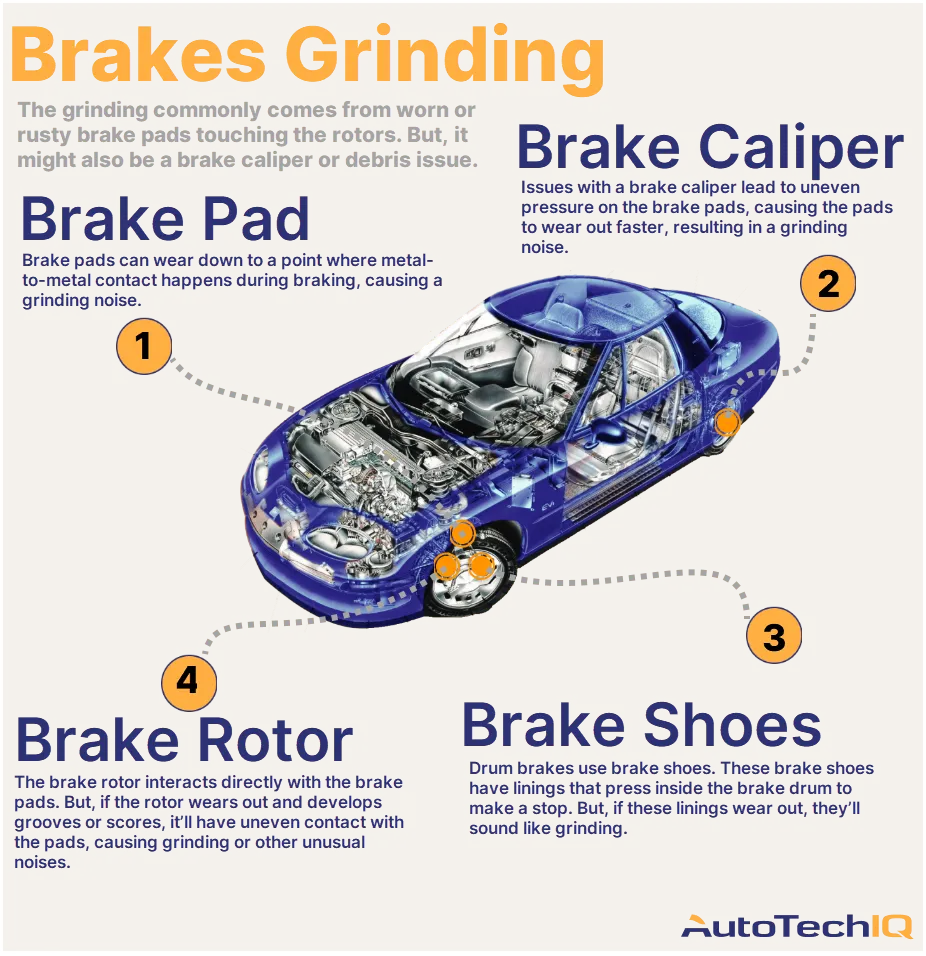
Common causes of a grinding noise when braking slowly
A grinding noise when braking slowly comes from parts rubbing where they should not. The most common causes are easy to miss if you only listen from inside the car.
- Worn brake pads causing metal-on-metal contact. This makes a low grinding sound at low speed.
- Scored or warped rotors that catch the pad edge as you slow down.
- Stuck or corroded caliper hardware that drags the pad.
- Small stones, rust flakes, or road debris trapped between pad and rotor.
- Brake shoe or drum wear on older drum brake systems.
Each cause changes the sound slightly. Worn pads sound harsh and steady. Debris gives a crunch that can come and go. Rotors often make a rough, vibration-linked grind. If you hear a grinding noise when braking slowly, treat it as a brake warning and inspect soon.

How to inspect safely and what to look for
You can do simple checks at home to narrow the problem. Always work on a flat surface with the parking brake set and use wheel chocks.
- Visual check of pad thickness
- Look through the wheel spokes. Pads thinner than 3 mm likely need replacement.
- Check for metal wear indicators
- Many pads have built-in indicators that scrape when pads are worn. A grinding noise often means the pad backing is touching the rotor.
- Inspect the rotor surface
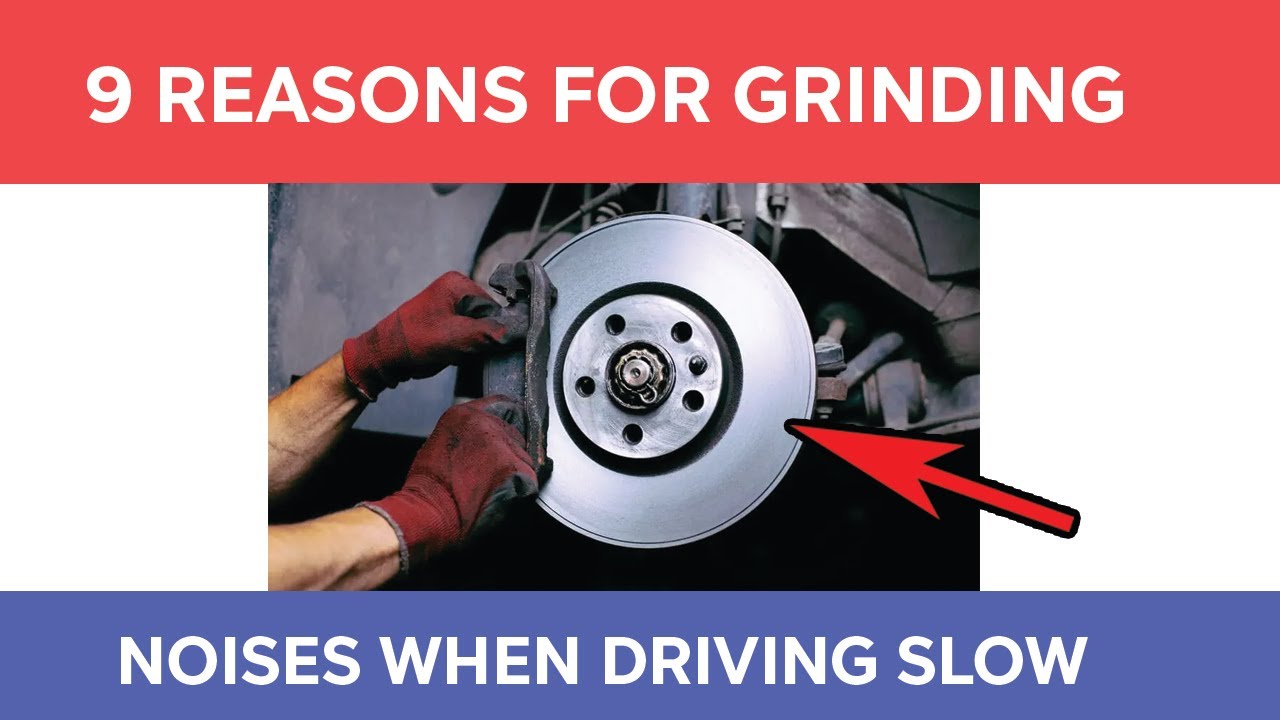
- A smooth rotor will look uniform. Deep grooves, blueing, or scoring suggest damage.
- Look for debris and rust
- Small pebbles can lodge near the edge and grind slowly.
- Feel for drag
- With the car lifted and wheel off, spin the rotor; it should turn freely. Any grinding or roughness points to trouble.
These checks help you decide whether you can fix it yourself or need a pro. If a grinding noise when braking slowly is present during inspection, do not delay repairs.

How professionals diagnose grinding noises
A trained technician uses a step-by-step approach to find the root cause. Diagnosis is quick with the right tools.
- Road test
- A slow, controlled drive helps reproduce the noise and pinpoint which wheel is affected.
- Lift and spin test
- Mechanics remove the wheel and spin the rotor to hear rubbing or grinding.
- Measure pad and rotor wear
- Measuring tools show pad thickness and rotor runout.
- Check caliper operation
- Seized slide pins or a sticking caliper piston cause uneven pad wear and grinding.
- Brake system scan
- A scan may reveal ABS or wheel sensor faults that accompany brake noise.
When a grinding noise when braking slowly is confirmed, the tech will show you the worn parts and explain the safest fix.

Repair options and expected costs
Fixes vary by cause. Costs depend on parts quality and labor rates. Below are typical options and price ranges.
- Replace brake pads only
- Use quality OEM or premium aftermarket pads. Expect parts and labor to be moderate.
- Resurface or replace rotors
- Light scoring can be machined. Deep grooves or thin rotors need replacement.
- Replace calipers or hardware
- Sticking calipers need rebuilding or replacement. Replace slide pins and clips as needed.
- Remove debris and clean components
- Quick and cheap when debris is the only issue.
- Full brake job
- Pads, rotors, calipers, and hardware replaced for severe wear.
Typical cost ranges (estimate):
- Pad replacement: low to moderate cost.
- Rotor replacement per axle: moderate to high cost.
- Caliper replacement: moderate cost per caliper.
If you hear a grinding noise when braking slowly, plan for a service visit. Ignoring it can increase repair costs quickly.
Preventing a grinding noise when braking slowly
Preventive care keeps brakes quiet and safe. Simple habits make a big difference.
- Check brake pads every 6,000 to 10,000 miles
- Early changes prevent metal contact that causes grinding.
- Clean wheels and brake parts during tire rotations
- Removes trapped stones and rust flakes.
- Use good quality pads suited to your driving
- Cheap pads wear faster and can cause noise.
- Avoid hard braking when possible
- Smooth braking extends pad life and reduces rotor stress.
- Replace worn hardware proactively
- Slide pins, shims, and clips keep pads aligned and quiet.
A routine that prevents a grinding noise when braking slowly saves time and money over years.
My hands-on experience and lessons learned
I once drove a car with a faint grinding noise when braking slowly for months. I thought it was minor. It was a bad call. The pads were down to metal and the rotors were ruined. I replaced both and paid triple what a timely pad change would have cost. Lesson learned: act early.
Other times I found tiny stones lodged near the rotor that made a scary grind. A quick clean fixed it. Inspecting your brakes regularly helps you spot the small, cheap fixes before they become costly.

When to seek professional help
If the grinding noise when braking slowly is loud, constant, or paired with vibration, seek help. Also get assistance if:
- You feel a grab, pull, or loss of braking power.
- The car pulls to one side when braking.
- The ABS light is on with noise.
- You lack tools or experience to inspect brakes safely.
A professional can confirm the issue and provide a safe repair. Brakes are a safety system; err on the side of caution.

Frequently Asked Questions of grinding noise when braking slowly
What does a grinding noise when braking slowly usually mean?
It most often means the brake pads are worn and the backing plate is rubbing the rotor. It can also be debris or a damaged rotor.
Can I keep driving with a grinding noise when braking slowly?
Short trips might be okay, but avoid long drives. Grinding usually indicates metal contact that can worsen quickly and damage rotors.
Are grinding brakes expensive to fix?
Costs vary. Pad replacement is moderate. If rotors need replacing, costs rise. Replacing calipers adds more expense.
Could it be just debris causing the grinding noise when braking slowly?
Yes. Small stones or rust flakes can cause grinding that stops after cleaning. Always inspect to be sure.
How can I stop grinding noise when braking slowly at home?
Check pad thickness, look for debris, and clean parts if safe to do so. Replace pads if they are thin or metal shows.
Conclusion
A grinding noise when braking slowly is a clear sign your brakes need attention. Check pads, rotors, and hardware early to avoid bigger repairs. Use regular inspections, quality parts, and gentle braking to keep brakes quiet and safe. If the noise is loud or you feel a safety issue, see a professional right away. Share your experience or questions below, or subscribe for more simple, useful car care tips.