The best wet dry car vacuum combines strong suction, useful tools, easy storage, and safe wet pickup.
A spilled drink, muddy floor mat, or trail of beach sand can make a clean car feel dirty fast. A regular household vacuum may struggle with damp messes and sharp bits, but a wet dry car vacuum handles both dry debris and small liquid spills. I compared size, tank capacity, hose reach, power, filters, tools, noise, and car-friendly design to find practical options for daily drivers, families, detailers, and garage users.
CRAFTSMAN CMXEVBE17250 Compact Wet Dry Vac

The CRAFTSMAN CMXEVBE17250 is a small shop vacuum with a 2.5-gallon tank and a listed 2.5 peak horsepower motor. Its compact body fits well in a garage, shed, or vehicle service area. I like this size for car owners who need more power than a tiny handheld vacuum but do not want a large machine taking over the trunk. It can collect dry dirt and handle suitable wet pickup jobs.
The portable shape makes it easy to move around seats, door pockets, and floor wells. Its tank gives you more room than most cordless car vacuums, so you can clean several areas before emptying it. The included hose and common shop-vac tools add useful reach for mats and tight gaps. As with any wet dry vacuum, remove or use the correct filter before picking up liquid, and empty the tank soon after use.
Pros:
- Compact 2.5-gallon size suits car cleaning
- Useful balance of power and portability
- Handles dry debris and approved wet pickup
- Easy to store in a small garage
- Large tank compared with handheld car vacuums
- Works with practical shop-vac accessories
Cons:
- Shorter capacity than large garage vacuums
- Power cord limits use away from an outlet
- Shop-vac sound may feel loud inside a small car
Vacmaster Beast Series 5-Gallon Wet Dry Vac

The Vacmaster Professional Beast Series VFB511H is built for people who want serious shop-vac power. It has a 5-gallon tank and a listed 5.5 peak horsepower rating. That larger body can collect a big load of sand, leaves, pet hair, and workshop dust before you need to stop. It is a strong choice when car cleaning is only one part of the job.
This model makes sense for a home detailer, truck owner, or busy garage. The tank is large enough for repeated cleanups, and the powerful motor can help lift stubborn dirt from carpet when you use the right nozzle. Its size also means more weight and more storage demand. I would choose it for deep cleaning and mixed garage work rather than quick crumbs after lunch.
Pros:
- Large 5-gallon collection tank
- High listed peak horsepower for demanding cleanup
- Good fit for trucks, SUVs, and work vans
- Useful for both car and garage projects
- Less frequent emptying during large jobs
- Strong choice for pet hair and heavy dirt
Cons:
- Bulkier than compact car vacuums
- Needs more storage space
- Can be more machine than a small-car owner needs
Armor All AA255W Portable Wet Dry Vac
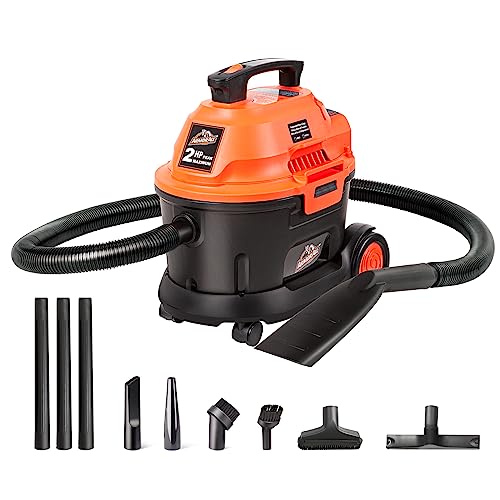
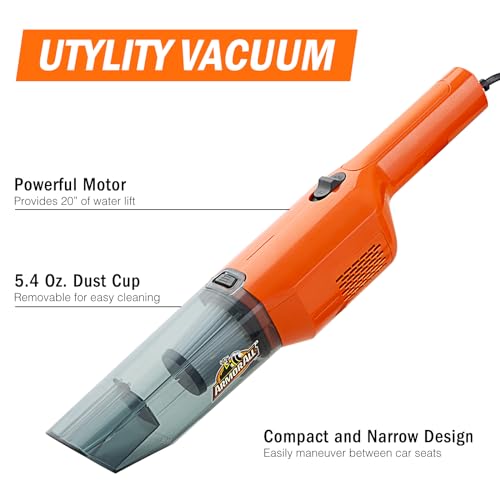
The Armor All AA255W is one of the most car-friendly options in this group. Its 2.5-gallon tank keeps the unit small enough for home storage while offering more capacity than a basic handheld cleaner. The listed motor rating is 2 peak horsepower. I see it as a practical tool for crumbs, dry leaves, spilled water, and routine interior care.
The orange and black body is easy to spot in a crowded garage. A small wet dry vacuum like this can reach under seats and around center consoles without the bulk of a large shop unit. It is also useful for cleaning garage shelves, work benches, and small outdoor messes. The main trade-off is that its compact tank fills sooner during heavy work.
Pros:
- Car-friendly 2.5-gallon capacity
- Compact design is easy to carry
- Suitable for dry dirt and small wet spills
- Good choice for routine vehicle cleaning
- Useful for home, garage, and workshop tasks
- Easy-to-see orange and black finish
Cons:
- Not ideal for very large cleanup jobs
- Corded use requires a nearby outlet
- Small tank may need frequent emptying with pet hair
Koblenz WD-2L Small Wet Dry Vacuum
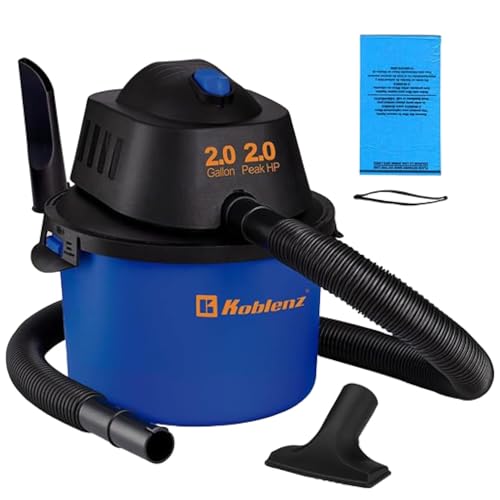
The Koblenz WD-2L is a compact wet dry vacuum made for home, car, garage, and workshop use. Its 2.0-gallon size keeps the footprint modest, which helps when storage space is tight. The listed motor rating is 2.0 peak horsepower. I would consider it for drivers who want a simple corded unit for normal car messes.
This vacuum can be easier to handle around seats and footwells than a tall, full-size shop vacuum. Its smaller tank also makes carrying and emptying less tiring. It is a helpful fit for apartment garages, small workshops, and occasional users. However, a smaller tank is not the best match for a large fleet, long-haired pets, or major flood cleanup.
Pros:
- Small footprint saves storage space
- Easy to carry around a vehicle
- Useful for dry debris and suitable wet pickup
- Fits small garages and work areas
- Simple size for occasional users
- Can clean more than just the car
Cons:
- Two-gallon capacity is limited for heavy jobs
- Not designed for large liquid recovery
- Corded design is less flexible outdoors
Stanley SL18116P 6-Gallon Wet Dry Vacuum

The Stanley SL18116P gives you a generous 6-gallon collection tank and a listed 4 horsepower motor. That capacity is useful when you clean several vehicles, remove a lot of sand, or work in a dusty garage. The black body has the familiar upright shop-vac shape. I like this model for users who want one machine for car care and household projects.
A large tank means fewer stops, which can make a long detailing session feel smoother. The unit is also a practical choice after storms, home repairs, or workshop jobs where wet and dry debris may appear together. It is less nimble than a small car vacuum, so plan to move it beside the vehicle rather than lift it into the cabin. For many families, that trade-off is worth the added capacity.
Pros:
- Large 6-gallon tank supports long cleaning sessions
- Listed 4 horsepower motor suits mixed jobs
- Good for multiple cars and garage work
- Handles larger dry debris loads
- Useful wet pickup capacity
- Versatile choice for home and workshop use
Cons:
- Heavier and less portable than small models
- May be oversized for quick interior cleaning
- Needs a clear storage area
CRAFTSMAN CMXEVBE17595 16-Gallon Shop Vac

The CRAFTSMAN CMXEVBE17595 is the largest and most powerful option in this review. It has a 16-gallon tank and a listed 6.5 peak horsepower motor. This is a full-size shop vacuum for serious garage work, large vehicle interiors, sawdust, renovation debris, and substantial wet messes. It can be an excellent central cleaning tool for a busy home workshop.
For car use, the large tank means you can clean multiple vehicles without stopping to empty it. The motor rating also gives this model plenty of capacity for heavy debris, though actual suction depends on the hose, filter, tool, and air path. Its size is the key issue. I would not buy it for a small apartment or occasional crumb cleanup, but it is impressive for a dedicated garage.
Pros:
- Very large 16-gallon collection tank
- Highest listed motor rating in this group
- Excellent for workshops and multiple vehicles
- Handles heavy dry debris loads
- Useful for larger wet cleanup tasks
- Reduces emptying during long jobs
Cons:
- Large footprint needs dedicated storage
- Heavy to move around a vehicle
- More power and capacity than most car owners need
Vacmaster VOC508S 5-Gallon Stainless Wet Dry Vac

The Vacmaster VOC508S combines a 5-gallon tank with a stainless steel body and a listed 4 peak horsepower motor. Stainless steel can be appealing in a garage because it is easy to wipe clean and does not have the same painted look as some plastic tanks. The red finish is bright and easy to see. This model offers a middle ground between compact car vacuums and large professional shop machines.
The five-gallon capacity works well for weekend detail jobs and general household cleanup. It gives you enough room for sand, leaves, dirt, and small liquid spills without making the unit as large as a 16-gallon model. I would place it on a garage shortlist for people who value tank space and a durable-looking shell. Its corded format still works best near an outlet.
Pros:
- Useful 5-gallon capacity
- Stainless steel tank is easy to wipe down
- Listed 4 peak horsepower motor
- Good middle size for cars and garages
- Bright finish improves visibility in storage areas
- Suitable for dry and wet cleanup tasks
Cons:
- Heavier than small plastic models
- Stainless body may show dents or marks
- Not as compact for tight vehicle spaces
Armor All AA155 1.5-Gallon Portable Vac

The Armor All AA155 is the smallest option here, with a 1.5-gallon tank and a listed 2 peak horsepower motor. Its portable design suits quick car care, small spills, and light garage cleanup. I would choose it when easy carrying matters more than long run time. It can fit well in a compact storage area or near a parking space with power.
A small wet dry vacuum helps you act fast when a child drops crackers or a drink spills on the floor. The compact tank is less tiring to carry, and the unit can be moved around seats with less effort than a large shop vac. It will fill faster with sand, pet hair, or leaves, so it works best for light and frequent cleaning. Think of it as a handy broom with suction rather than a heavy-duty workshop machine.
Pros:
- Very portable 1.5-gallon design
- Easy to store in small spaces
- Good for quick car cleanups
- Handles suitable wet and dry tasks
- Light-duty choice for small vehicles
- Simple to carry from room to room
Cons:
- Small tank fills quickly with heavy debris
- Less suitable for multiple vehicles
- Not the best choice for major garage projects
My Recommendation
After comparing these models, I would start with the CRAFTSMAN CMXEVBE17250 or Armor All AA255W for most car owners. Both offer a useful balance of size, capacity, and wet dry cleaning ability. The CRAFTSMAN has a little more room for general shop use, while the Armor All feels especially natural for routine car care. The best wet dry car vacuum is not always the biggest one; it is the one you will actually pull out and use.
Choose the Armor All AA155 if you want the easiest unit to carry. Move up to the Vacmaster Beast, Stanley, or Vacmaster stainless model for trucks, pets, several cars, or garage work. The large CRAFTSMAN 16-gallon model suits serious users who need a shop centerpiece. Before buying, check outlet access, hose length, storage space, filter instructions, and the tools included with the current package.
| Best for | Why |
|---|---|
| Routine car cleaning | The Armor All AA255W offers a compact body and useful 2.5-gallon capacity. |
| Large garage and vehicle jobs | The CRAFTSMAN CMXEVBE17595 provides a 16-gallon tank and high listed motor rating. |
| Portable light-duty cleaning | The Armor All AA155 is easy to carry and store for fast mess removal. |
How I Evaluated the Best Wet Dry Car Vacuum Options
I look at more than a peak horsepower number when I review a shop vacuum. That number is a marketing rating taken under specific conditions, and it does not equal the suction you feel at the nozzle during every job. Hose size, filter condition, tool design, airflow, and a sealed air path all affect real use. I give more weight to the full design than to one large number on the box.
Tank size matters too. A 1.5- or 2.5-gallon unit is easier to carry and store, but a 5-, 6-, or 16-gallon model needs fewer stops during a long job. I also consider whether the body can roll smoothly, whether the hose reaches the footwells, and whether the tools can get under seats. These small details often decide whether a vacuum feels helpful or frustrating.
Wet pickup needs special care. Users should follow the product manual because filter requirements differ by design. Never assume a dry paper filter is ready for liquid, and never leave dirty water sitting in the tank. Unplug the unit before service, keep water away from electrical connections, and let parts dry before storage.
What to Look for in a Wet Dry Car Vacuum
Tank capacity
For one car, a 1.5- to 2.5-gallon tank can be enough. It keeps the vacuum light and easy to move. A 5- or 6-gallon tank fits owners who clean SUVs, trucks, family cars, and garages. A 16-gallon tank is best for heavy work, not for a small cleaning closet.
Suction and airflow
Good suction helps lift grit from carpet, but airflow helps move that dirt through the hose. I prefer a model with a useful hose and nozzle rather than one chosen only for its peak horsepower claim. Keep the filter clean and check the hose for clogs. A blocked path can make a strong motor feel weak.
Hose length and tool design
Car interiors have deep footwells, narrow gaps, and awkward seat rails. A hose that is too short forces you to drag the vacuum or work at a poor angle. A crevice tool helps with seams, while a wide nozzle works faster on mats. A brush tool can loosen dust from vents and fabric.
Wet pickup setup
Do not use the same setup for dry dust and liquid unless the manual allows it. Some filters must come out for wet pickup, while foam filters may be required. Empty liquid after use and rinse the tank when needed. A clean, dry tank helps reduce odor and keeps the next job pleasant.
Power source
Corded vacuums deliver steady power, but they need a nearby outlet. This is fine in a garage or driveway with safe outdoor power. A cordless car vacuum offers more freedom but often has a smaller tank and shorter run time. For wet dry cleaning, corded shop models usually provide more capacity for the money.
Storage and portability
Measure your shelf or cabinet before you buy. A big shop vacuum can perform well and still become a nuisance if it blocks the door. Wheels help with large tanks, while a top handle helps with stairs and vehicle work. The best wet dry car vacuum should fit your cleaning routine, not just your wish list.
Wet Dry Car Vacuum Cleaning Tips
Start by removing floor mats and large objects. Shake or brush the mats outdoors before vacuuming them. Work from the dashboard and seats toward the floor so falling dust does not force you to repeat a section. Use a crevice tool around seat tracks, belt anchors, and console edges.
For pet hair, move the nozzle slowly and use a brush to break the hair loose. Fast passes can skim over hair that is woven into carpet. For sand, use a wide nozzle first, then switch to a narrow tool for seams. Empty the tank before it becomes packed with debris, since a full container can reduce airflow.
For a liquid spill, blot what you can with an absorbent towel first. Then use the correct wet-pickup setup and make slow passes. Do not vacuum fuel, solvents, hot ash, or unknown chemicals. These materials can create fire, health, or equipment risks, and a typical consumer shop vacuum is not designed for them.
When the job ends, unplug the vacuum and inspect the hose, filter, tank, and tools. Clean the tank if it collected liquid or food. Let wet parts dry in a safe place before putting them away. This simple habit helps prevent sour smells and keeps the best wet dry car vacuum ready for the next spill.
Why a Wet Dry Vacuum Beats a Small Handheld for Some Cars
A handheld car vacuum is convenient for crumbs, but it often has a small cup and limited suction. A shop-style wet dry vacuum gives you a larger tank and a longer hose. That means fewer stops and better reach around the whole cabin. It also gives you a way to collect small liquid spills that many dry-only units cannot handle.
The trade-off is size and noise. A shop vacuum usually needs an outlet and may sound louder than a battery model. It also takes more room in storage. If you clean your car once a month, a small unit may be enough. If you have kids, pets, muddy shoes, or a work truck, the extra capacity can feel like a quiet form of relief.
FAQs Of best wet dry car vacuum
Can I use a wet dry vacuum inside my car?
Yes, you can use one for car interiors when the manual allows it. Use the proper filter and wet-pickup setup for liquid. Keep the motor and electrical parts away from standing water.
What size wet dry vacuum is best for a car?
A 1.5- to 2.5-gallon model works well for normal interior cleaning. Choose 5 gallons or more if you clean several vehicles, carry pets, or also need a garage vacuum.
Is peak horsepower the same as suction power?
No. Peak horsepower is a motor rating, not a complete measure of cleaning performance. Airflow, hose design, filters, seals, and the nozzle also affect real suction.
Can I vacuum spilled water with a shop vacuum?
Most wet dry models can collect suitable small liquid spills, but you must follow the manual. Use the correct filter, avoid hazardous fluids, and empty and dry the tank after use.
How do I stop a wet dry car vacuum from smelling?
Empty the tank after wet pickup, rinse it when needed, and let it dry fully. Clean the filter as directed. Food bits and damp debris left inside are common causes of odor.
Final Verdict: Which Should You Buy?
For most drivers, I recommend the CRAFTSMAN CMXEVBE17250 as the best wet dry car vacuum balance. It offers useful capacity without the bulk of a large shop unit. Choose the Armor All AA155 for light, portable care or the CRAFTSMAN 16-gallon model for serious garage work.
The right wet dry car vacuum makes spills, sand, pet hair, and daily crumbs easier to manage. Pick the size that fits your car, storage space, and cleaning habits, then keep the filter and tank clean for reliable service.