The best budget OBD2 scanners offer clear codes, live data, and dependable help without draining your wallet.
A check engine light can turn a calm drive into a guessing game. You may wonder if the issue is a loose gas cap, a bad sensor, or a costly repair. The best budget OBD2 scanners give you a useful first look before you visit a shop. I reviewed these models for ease of use, code reading, live data, vehicle coverage, and value. They cannot replace a trained mechanic, but they can help you make smarter repair choices and avoid needless diagnostic fees.
ANCEL AD310 Classic OBD2 Scanner

The ANCEL AD310 is one of the simplest ways to start checking a warning light at home. It is a corded handheld scanner for OBD2 vehicles, including most cars sold in the United States from 1996 onward. The large buttons and plain screen make it easy to use, even if you have never handled a scan tool before. I like its direct design because you plug it in, turn on the ignition, and begin testing without an app or account.
This scanner can read and clear engine fault codes, show basic code information, and display useful emissions readiness details. Its compact size makes it easy to keep in a glove box or tool drawer. It draws power through the vehicle’s diagnostic port, so you do not need to charge a battery. For basic check engine light work, the AD310 remains a strong value among the best budget OBD2 scanners.
Pros:
- Simple plug-and-play operation
- Reads and clears common engine codes
- Works with many 1996 and newer OBD2 vehicles
- Compact design fits in a glove box
- No phone, app, or battery charging required
- Clear controls for first-time users
Cons:
- Does not provide full ABS or airbag diagnosis
- Small screen limits the amount of data shown at once
- Vehicle coverage should still be checked before purchase
My Recommendation
I recommend the ANCEL AD310 for drivers who want a basic engine code reader at a low price. It suits home users, used-car buyers, and anyone who wants to learn more before calling a repair shop. It is not the right pick for advanced system testing, but it handles the first step well. If your main goal is affordable check engine light diagnosis, this is one of the best budget OBD2 scanners to keep in your car.
| Best for | Why |
|---|---|
| First-time users | Simple controls and direct operation reduce the learning curve. |
| Basic engine checks | It reads and clears common powertrain trouble codes. |
| Emergency glove-box use | The small, corded design needs no charging or wireless setup. |
FOXWELL NT301 OBD2 Scanner

The FOXWELL NT301 adds live data to the basic code-reading job. That feature lets you watch selected sensor readings while the engine runs. Instead of seeing only a code, you can observe information from systems such as engine speed, coolant temperature, and oxygen sensor activity when supported by the vehicle. The color screen and dedicated controls also make the unit feel more like a small shop tool than a bare code reader.
The NT301 can read and erase diagnostic trouble codes and display freeze-frame information. Freeze-frame data records vehicle conditions at the moment a fault appeared, which can help you understand when the problem began. I see this model as a good middle ground for drivers who want more detail than the AD310 but do not need a full professional scan platform. It is a practical choice among the best budget OBD2 scanners for routine engine diagnosis.
Pros:
- Displays live engine data
- Shows freeze-frame information for stored faults
- Reads and clears check engine codes
- Color display improves data viewing
- Useful for home mechanics learning sensor behavior
- Dedicated buttons make common tasks easy to find
Cons:
- Primarily focuses on engine and emissions systems
- Live data usefulness depends on vehicle support
- It is not a complete service reset or module scanner
My Recommendation
The FOXWELL NT301 is best for owners who want live data without paying professional scan-tool prices. I would choose it for a hands-on driver who wants to compare sensor readings and understand a recurring engine issue. It offers more diagnostic depth than a simple code reader while staying approachable. For practical home testing, it is one of the best budget OBD2 scanners available in this group.
| Best for | Why |
|---|---|
| Live-data users | It can show supported sensor values as the engine runs. |
| DIY troubleshooting | Freeze-frame information adds context to stored fault codes. |
| Drivers wanting a color screen | The display makes readings easier to follow during a test. |
MOTOPOWER MP69033 OBD2 Code Reader

The MOTOPOWER MP69033 is a friendly choice for drivers who want a bright, simple handheld scanner. Its yellow housing is easy to spot in a crowded tool box, and the screen gives basic test results without a phone connection. The unit supports common OBD2 protocols used by many cars from 1996 onward. Its design is focused, so you do not spend time navigating complex menus for a basic engine check.
This scanner can read and clear fault codes and help check emissions readiness status. It is useful before an inspection because readiness monitors may show whether the car has completed its self-tests. I would not buy it for advanced ABS, SRS, or transmission work, but that is not its purpose. For everyday check engine light questions, the MP69033 gives budget buyers a clear and convenient starting point.
Pros:
- Bright, easy-to-find yellow body
- Supports common OBD2 protocols
- Reads and clears engine fault codes
- Helpful emissions readiness information
- Simple menu for casual vehicle owners
- Powered through the OBD2 port
Cons:
- Does not replace a full-system diagnostic tool
- Limited information compared with scanners that show live data
- Some vehicle functions may not be supported
My Recommendation
I recommend the MOTOPOWER MP69033 for a car owner who wants a low-cost reader with a simple interface. It is a good match for checking a warning light, clearing a repaired code, or checking readiness before an emissions test. The colorful body and basic controls also make it less intimidating for new users. If you want one of the best budget OBD2 scanners for simple tasks, this model deserves a close look.
| Best for | Why |
|---|---|
| Casual car owners | It keeps the diagnostic process simple and focused. |
| Inspection preparation | Readiness information can show whether monitors have run. |
| Easy storage | The compact handheld design fits well in a home tool kit. |
Innova 5210 OBD2 Scanner

The Innova 5210 is aimed at drivers who want several useful functions in one handheld tool. In addition to engine code reading, its listed features include live data, battery testing, and oil reset support for compatible vehicles. It also works with a vehicle repair app through Bluetooth compatibility. That mix makes it more versatile than a basic code reader, especially for owners who maintain more than one car.
I like the way the 5210 combines quick checks with extra service information. A battery test can help separate a weak battery from an engine fault, while live data can offer more clues during troubleshooting. Oil reset functions depend on vehicle coverage, so I always suggest checking compatibility before buying. For owners who want broad everyday value, this is one of the best budget OBD2 scanners in the review.
Pros:
- Combines code reading with battery testing
- Offers live data on supported vehicles
- Includes oil reset capability for compatible models
- Bluetooth compatibility adds app-based support
- Useful for routine maintenance and fault checks
- Can serve several needs in one tool
Cons:
- Some functions depend on vehicle compatibility
- More features may require extra learning time
- It may cost more than a basic engine code reader
My Recommendation
The Innova 5210 is best for a driver who wants more than code clearing but still prefers a handheld scanner. I would pick it for a household with several vehicles or for someone who checks batteries and service reminders at home. It offers a useful balance between price and function, though advanced module diagnosis remains outside its main role. Among the best budget OBD2 scanners, it is a strong all-around choice when maintenance features matter.
| Best for | Why |
|---|---|
| Routine maintenance | Battery testing and oil reset support add daily value. |
| Multiple vehicles | One tool can help with several common vehicle checks. |
| App-friendly users | Bluetooth compatibility can extend the repair experience. |
ANCEL AD410 Enhanced OBD2 Scanner

The ANCEL AD410 builds on the basic AD310 design with an enhanced interface for common OBD2 tasks. It is made for cars from 1996 onward that use supported OBD2 protocols. The yellow and black housing feels practical, and the corded format means you can begin a test as soon as you connect it. There is no wireless pairing step, which helps when you need a quick answer in a driveway or parking lot.
The AD410 is useful for reading and clearing engine fault codes and checking information linked to a check engine light. It is a sensible step up for someone who wants a little more than the most basic scanner without moving into an expensive professional unit. As with any OBD2 tool, clearing a code does not repair the cause of the fault. Still, the AD410 gives owners a useful way to confirm a repair and monitor a returning problem.
Pros:
- Enhanced design remains easy to use
- Reads and clears common engine codes
- Supports many OBD2 vehicles from 1996 onward
- Works without a phone or wireless connection
- Compact body is easy to store
- Good fit for basic home diagnostics
Cons:
- Limited mainly to engine and emissions diagnosis
- Does not offer full ABS or airbag scanning
- Advanced users may want more live-data functions
My Recommendation
I recommend the ANCEL AD410 for a driver who wants a simple scanner with a slightly more refined feel than an entry-level reader. It works well for routine code checks, used-car inspections, and basic post-repair testing. I would choose it over a wireless tool when instant, no-app operation matters most. It remains one of the best budget OBD2 scanners for practical home use and easy storage.
| Best for | Why |
|---|---|
| Quick driveway checks | The corded setup starts without charging or pairing. |
| Basic repair confirmation | It can clear codes after the underlying repair is complete. |
| New DIY owners | The focused feature set avoids a crowded menu system. |
FOXWELL NT604 Elite Full-System Scanner

The FOXWELL NT604 is for buyers who need more than engine code access. Its product listing highlights coverage for ABS, SRS, and transmission systems, which can make it far more useful than a basic OBD2 reader. These systems can trigger warning lights that a simple engine scanner may not access. The NT604 therefore targets serious DIY users and small garages that want broader diagnostic coverage on compatible vehicles.
More system access also means more responsibility. A code points toward a circuit or condition; it does not always identify the failed part. I recommend using the NT604 with service information, wiring checks, and safe repair habits. If your vehicle supports its functions, this scanner can reduce guesswork and help you decide when a repair needs professional attention.
Pros:
- Designed for ABS, SRS, and transmission diagnosis
- Offers broader coverage than engine-only readers
- Useful for serious DIY repair work
- Can help investigate several warning light types
- May reduce repeated trips to a repair shop
- Better suited to a multi-system vehicle tool kit
Cons:
- Coverage varies by vehicle make, model, and year
- More complex than a basic code reader
- Users should understand safety steps before SRS work
My Recommendation
The FOXWELL NT604 is best for experienced DIY mechanics who want access beyond the powertrain system. I would consider it for a family garage with several vehicles or for a user who often sees ABS, airbag, or transmission warnings. It may be more tool than a casual owner needs, but its broader reach can justify the cost. For multi-system capability at a budget-minded price, it stands apart from many best budget OBD2 scanners.
| Best for | Why |
|---|---|
| ABS warning diagnosis | It is designed to access supported anti-lock brake systems. |
| SRS and airbag checks | Its listed coverage reaches supported restraint systems. |
| Advanced DIY users | Broader system access supports deeper troubleshooting. |
VDIAGTOOL VD10 OBD2 Code Reader
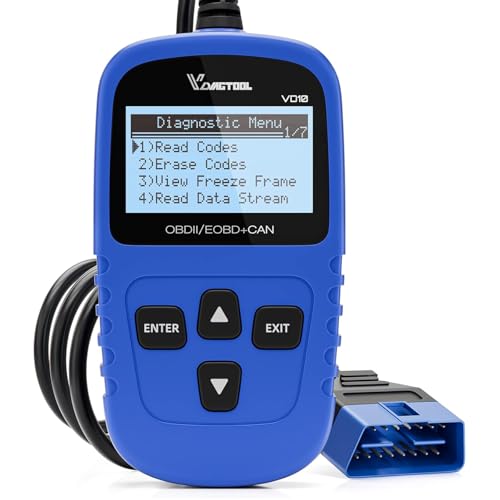
The VDIAGTOOL VD10 focuses on the core tasks most car owners need. It reads engine fault codes, displays freeze-frame data, and checks I/M readiness for supported OBD2 vehicles. These features make it useful for both a warning light and an upcoming emissions inspection. Its corded design keeps operation simple and avoids concerns about wireless pairing or a dead scanner battery.
I especially like the inclusion of freeze-frame and readiness information in a budget model. Freeze-frame data can show what the car was doing when it stored a fault, while readiness checks can reveal whether the emissions monitors have completed. The VD10 will not diagnose every vehicle system, but it can answer several common ownership questions quickly. It is a sensible option for drivers who want practical information rather than a long list of advanced menus.
Pros:
- Reads engine fault codes on supported vehicles
- Provides freeze-frame information
- Checks I/M readiness status
- Useful before an emissions inspection
- No wireless setup or charging required
- Focused interface suits home users
Cons:
- Designed mainly for engine and emissions systems
- Does not provide full module coverage
- Readiness results can change after codes are cleared
My Recommendation
The VDIAGTOOL VD10 is best for a driver who wants a practical inspection and check-engine tool. I would choose it for checking readiness before a test or for learning more about a stored fault before visiting a mechanic. It offers useful data without the extra cost of a broad professional scanner. For clear, focused work, it earns a place among the best budget OBD2 scanners.
| Best for | Why |
|---|---|
| Emissions checks | I/M readiness information helps show whether monitors have run. |
| Stored-code research | Freeze-frame data gives more context than a code alone. |
| Simple home use | The corded design avoids apps, accounts, and wireless setup. |
Veepeak OBDCheck BLE Bluetooth Scanner

The Veepeak OBDCheck BLE takes a different path from the handheld models in this review. It is a small Bluetooth Low Energy adapter that connects to compatible iOS or Android devices. You use a supported app to read vehicle information, view codes, and access features offered by that app. This makes the Veepeak a good fit for people who prefer a phone screen and already feel comfortable with mobile technology.
The compact adapter is easy to leave in a glove box, and its wireless format reduces cable clutter. App choice matters, since functions, prices, and supported data can vary between applications. I recommend checking phone compatibility and app requirements before ordering. For drivers who want a small wireless tool and flexible app access, the Veepeak is one of the best budget OBD2 scanners in adapter form.
Pros:
- Works with compatible iOS and Android devices
- Small size makes storage easy
- Bluetooth connection reduces cable clutter
- Uses a phone screen for data viewing
- Can work with different supported diagnostic apps
- Convenient for users who already carry a smartphone
Cons:
- Requires a compatible phone and app
- App features may vary by provider
- Wireless setup may feel less direct than a handheld reader
My Recommendation
The Veepeak OBDCheck BLE is best for phone-first users who want a small wireless adapter. I would choose it for a driver who likes app-based data, wants less equipment in the car, and understands that the app controls much of the experience. It is less ideal for someone who wants a stand-alone scanner with physical buttons. When convenience and portability lead the decision, it is a strong wireless entry among the best budget OBD2 scanners.
| Best for | Why |
|---|---|
| Smartphone users | The adapter sends diagnostic data to compatible mobile devices. |
| Small-car storage | The compact form takes up very little room. |
| Wireless convenience | Bluetooth removes the need to hold a corded scan tool. |
How to Choose the Best Budget OBD2 Scanner
Buying a low-cost scanner does not mean choosing the cheapest item without checking its purpose. First, decide what you need to test. If you only want to read a check engine light, a basic code reader may be enough. If you need ABS, SRS, transmission, battery, or oil reset functions, you must choose a model that lists those systems and supports your vehicle.
I also suggest checking the vehicle year and market. Most gasoline vehicles sold in the United States from the 1996 model year use OBD2, but that does not guarantee that every scanner can access every module. A tool may read the engine computer yet fail to communicate with the airbag or transmission module. Always review the scanner’s compatibility details before you rely on it for a specific repair.
Code Reading and Code Clearing
Every scanner in this review centers on diagnostic trouble codes, but code handling is only the first step. A code is a clue, not a final diagnosis. For example, a sensor-related code may come from a failed sensor, damaged wiring, a vacuum leak, or another condition that changes the sensor’s reading.
Clearing a code can turn off the check engine light for a short time, but it does not fix the problem. It also resets many emissions monitors. If you clear codes before an inspection, the vehicle may need time and varied driving conditions before the monitors complete. A good scanner helps you see this status rather than leaving you to guess.
Live Data and Freeze-Frame Information
Live data shows readings while the car runs. This can help a skilled user spot values that look unusual. Freeze-frame data captures engine conditions when the computer stored a fault. Together, these features provide a more complete picture than a code number alone.
However, live data takes practice. A value that looks high or low may still be normal under a certain load or temperature. I recommend comparing readings with reliable repair information for your exact vehicle. The FOXWELL NT301, Innova 5210, and some other models here are better choices if you want to learn from data rather than only clear lights.
Handheld Scanner or Bluetooth Adapter?
A handheld scanner is ready when you plug it in. It has its own buttons and screen, so you do not need a phone, wireless connection, or app. This is helpful for older drivers, shared family vehicles, and quick roadside checks.
A Bluetooth adapter is smaller and can show more information through a phone app. It may suit a tech-minded owner who likes charts and mobile records. The tradeoff is that app quality and supported functions vary. When comparing the best budget OBD2 scanners, think about how you actually work, not just how many features appear on the box.
Vehicle Coverage Matters
OBD2 compatibility is not always the same as full vehicle coverage. A scanner may support standard powertrain codes across many cars but offer special functions only for certain makes and models. This is especially important for ABS, SRS, transmission, oil reset, and battery functions.
Before you buy, check the exact year, make, model, engine, and requested system. If the manufacturer provides a coverage tool, use it. A few minutes of checking can prevent the frustration of receiving a tool that reads less than you expected.
Safety and Good Diagnostic Habits
Use a scanner while parked in a safe place. Do not hold a device while driving unless a qualified helper handles it. Keep clear of belts, fans, hot exhaust parts, and moving components when observing live data.
Airbag systems need extra care. A code reader may show an SRS fault, but that does not make airbag repair safe for every user. Disconnecting a battery does not remove every risk. If you do not have the correct service steps, let a trained technician inspect the system.
What Can an OBD2 Scanner Tell You?
An OBD2 scanner can retrieve information stored by a vehicle computer. It may show a generic code, a manufacturer-specific code, freeze-frame details, readiness status, and live values. The exact information depends on the vehicle and scanner.
It can help answer questions such as, “Why is the check engine light on?” or “Are my emissions monitors ready?” It may also help you confirm that a repair removed a stored fault. It cannot promise a perfect diagnosis from one code, and it cannot replace physical testing when several causes are possible.
I treat a scanner like a flashlight. It illuminates the area that needs attention, but it does not perform the repair. This mindset helps prevent expensive parts swapping and makes the tool more useful over time.
Common Mistakes to Avoid
The first mistake is buying a scanner for a feature without confirming coverage. A product page may mention a system, but support can still vary by vehicle. Always match the tool to your car and the exact problem.
The second mistake is clearing a code before writing it down. Record the code, freeze-frame details, and symptoms first. The information may disappear after clearing, making the original problem harder to study.
The third mistake is treating every code as a failed part. Test the wiring, connectors, fuses, fluid level, and related systems when the repair guide calls for it. A careful diagnosis costs less than replacing several good parts.
The fourth mistake is ignoring a flashing check engine light. A flashing light can signal a serious misfire that may damage the catalytic converter. Reduce driving and seek qualified help rather than using a scanner as permission to continue a risky trip.
FAQs Of best budget obd2 scanners
What is the best budget OBD2 scanner for basic use?
The ANCEL AD310 is a strong basic choice. It reads and clears common engine codes and needs no app or charging. Choose it when you want simple check engine light information.
Can a budget OBD2 scanner clear a check engine light?
Many can clear engine fault codes after you record them. Clearing the code does not repair the cause. The light may return if the problem remains.
Will every OBD2 scanner read ABS and airbag codes?
No. Many low-cost scanners only read engine and emissions codes. Choose a model that clearly lists ABS and SRS coverage, then confirm support for your exact vehicle.
Should I buy a Bluetooth OBD2 scanner?
Buy one if you prefer using a phone app and want a small adapter. A handheld scanner is better if you want a stand-alone tool with no pairing or app requirement.
Can I use an OBD2 scanner before an emissions test?
Yes. A scanner with I/M readiness can show whether the emissions monitors have completed. Do not clear codes just before testing, because clearing them can reset monitor status.
Final Verdict: Which Should You Buy?
For most owners, the ANCEL AD310 gives the best mix of price and simplicity. Choose the FOXWELL NT301 for live data, the Innova 5210 for added maintenance features, or the FOXWELL NT604 for broader system access.
The best budget OBD2 scanners make car ownership less stressful. Match the tool to your vehicle, record codes before clearing them, and use scan results as repair clues.